Growing Food in California
Growing Food in California
Explore community gardens, food forests, farms, and edible landscapes across California while meeting the growers who are learning what works in their own climates, communities, and growing spaces.
Explore California Through the People Growing Here
Step inside real California growing spaces and hear directly from the people creating them. These tours focus on the growers, their communities, and what they have learned through experience in their own local conditions.
Different Regions, Different Ways to Grow
California includes an enormous range of growing environments, from mild coastal communities to hot inland valleys, deserts, mountains, and cooler northern regions. Because conditions vary so much, the growers featured by The Green Yard offer a look at what food production can mean in their own specific places rather than one single California growing experience.
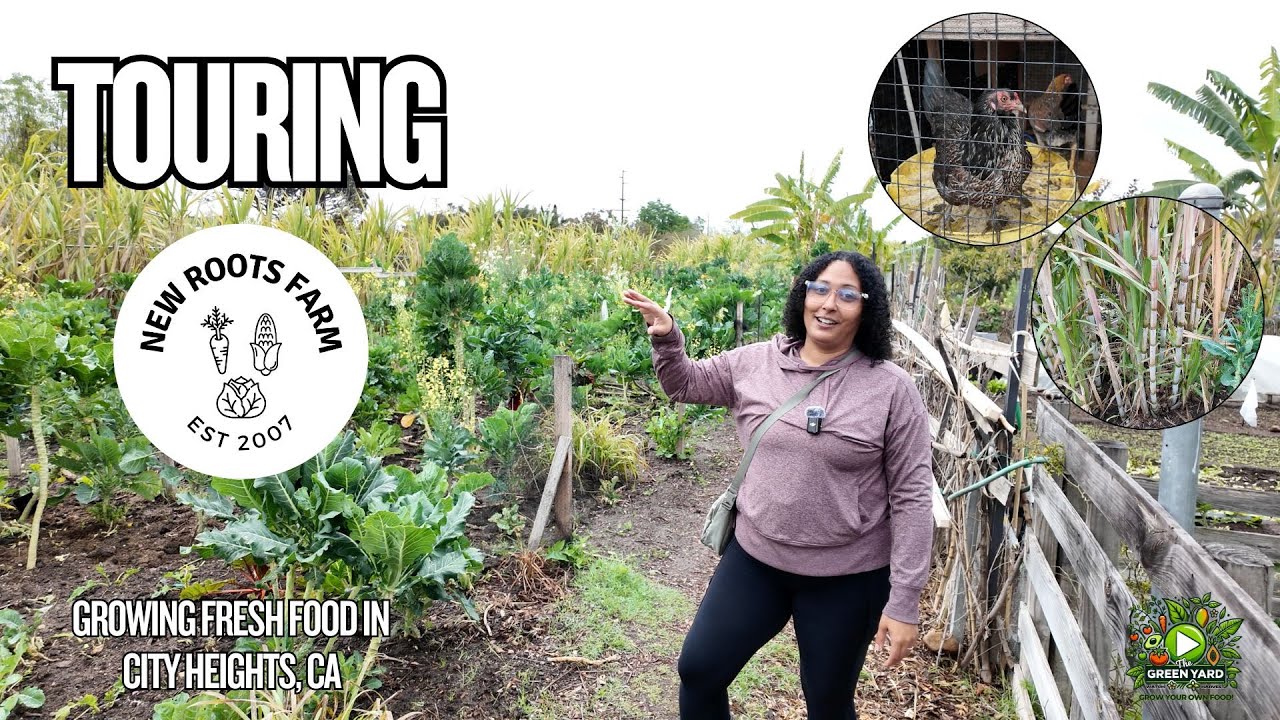
Our current California tour is in San Diego, where New Roots Community Farm shows another side of edible growing: people using shared land to grow culturally important foods, maintain agricultural traditions, and build community through food.
Rather than presenting one formula for growing in California, these tours are an opportunity to learn directly from the people doing the work: what they grow, why they grow it, what challenges they face, and how their landscapes change through experience.
California Growing Context
California is far too diverse for one climate description. These broad points provide context for the environments growers may encounter, while the individual tours show what those conditions look like on the ground.
Mediterranean, coastal, desert, mountain, and inland climates all occur within the state.
Coastal and Southern California locations can support food production through much of the year.
Coastal areas may stay mild while inland locations can experience intense heat and high irrigation demand.
Southern coastal areas are often mild, while inland and high-elevation regions can experience significant frost or snow.
Dry summers make irrigation, soil moisture conservation, and drought-aware design important in many regions.
The state supports everything from cool-climate fruit to subtropical crops depending on location and microclimate.
What California Growers Are Working With
Opportunities Growers Explore
- A wide range of climates creates an equally wide range of crops
- Long growing seasons in many coastal and southern communities
- Strong traditions of home gardening, farming, and community growing
- Warm areas allow growers to experiment with many subtropical fruits
- Different cultural communities bring diverse crops and growing knowledge
Growing Challenges
- Water availability and dry summer conditions in many regions
- Extreme heat in inland valleys and desert communities
- Cold, frost, or snow in other parts of the state
- Wildfire, wind, and other regional environmental pressures
- Conditions vary enough that growers must adapt to their specific location
Plants Featured Across California
California growers work with an unusually broad range of edible plants. These are examples grown in different parts of the state; the individual tours provide the real-world context for where and how particular plants are being grown.