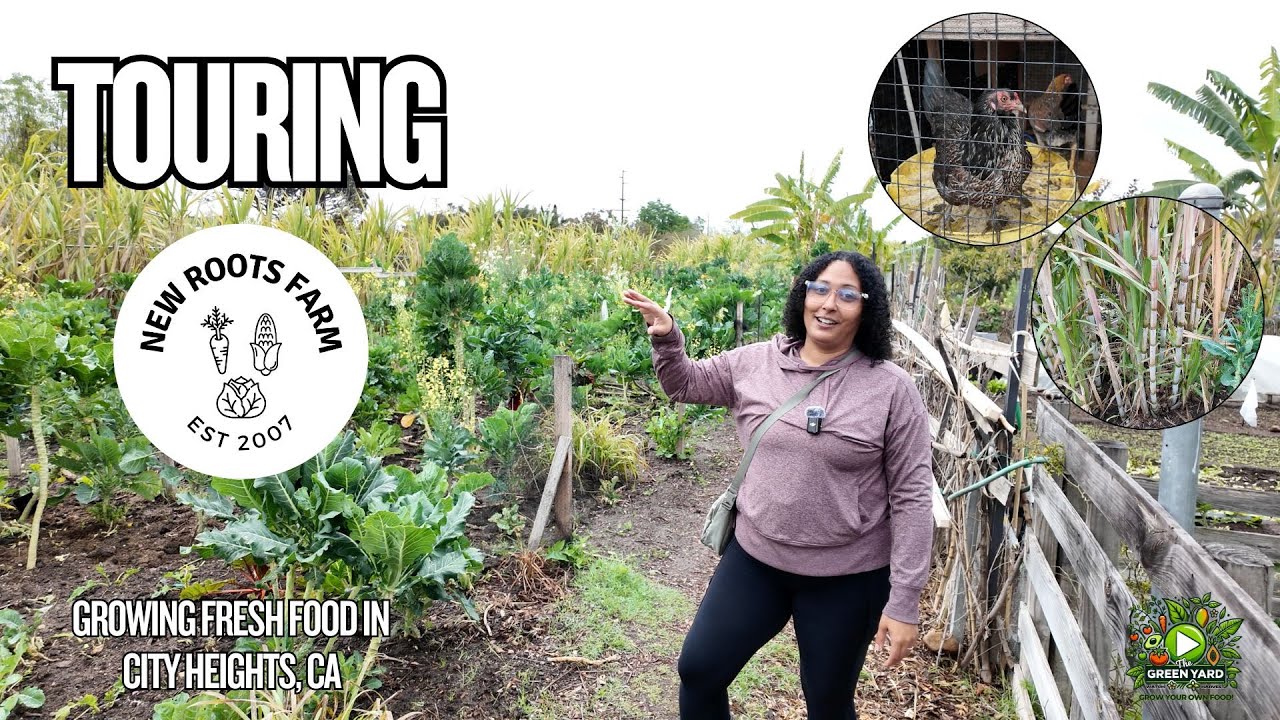
Inside A Diverse Community Garden in San Diego
New Roots Community Farm, New Roots Community Garden, San Diego community garden, City Heights community garden, San Diego urban farm, refugee community garden, immigrant farmers San Diego, multicultural community garden, community agriculture, urban farming San Diego, culturally important crops, City Heights Farmers Market, community composting, food access San Diego, International Rescue Committee garden
Inside One of America’s Most Diverse Community Gardens
Tour New Roots Community Farm in San Diego, where 74 farmers from East Africa, Southeast Asia, Latin America, and other regions grow culturally important crops, share farming traditions, sell fresh produce, and build community through food.
New Roots Community Farm is more than a collection of garden plots. In the middle of San Diego’s City Heights neighborhood, 74 farmers from different parts of the world use the same land to grow food connected to their families, cultures, health, and livelihoods. Walking through the farm can feel like moving between countries as growing styles, crops, recipes, and agricultural traditions change from one plot to the next.
Inside New Roots Community Farm
New Roots Community Farm was established in 2007 when a group of local residents came together to create a place where people could grow their own food. Some of the original farmers were still cultivating plots at the time of the tour, giving the farm a sense of continuity that spans many growing seasons.
The farm includes 74 growers from a wide range of backgrounds. Desiree describes East African, South American, Central American, Cambodian, Burmese, and other Asian farmers working throughout the property. Each plot reflects the preferences, techniques, and foods important to the people caring for it.
That diversity is visible in both the crops and the way they are grown. Some farmers cultivate large stands of kale and collards, while others harvest vegetables at a younger stage for microfarming. Some plots are built around perennial crops, fruit trees, sugar cane, and bananas, while others focus on herbs, greens, eggplants, beets, radishes, and produce sold directly to local communities.
What You’ll Learn From This San Diego Community Garden
A Greenhouse Built by the Community
One of the first stops is the farm’s greenhouse, which farmers spent more than 200 hours building. The structure gives growers a protected place to start seedlings, propagate herbs, and prepare plants for the coming season.
At the time of the visit, the greenhouse contained young plants being prepared for spring. Some would eventually move into farmers’ plots, while others were intended for a donation-based plant sale that could help raise money for the farm.
The greenhouse also reflects an effort to make shared infrastructure useful to more growers. Farmers start peppers, basil, mint, and seeds connected to their own food traditions. Desiree hopes increased participation will allow the space to become a stronger educational and productive resource for the entire farm.
Chickens, Eggs, and Shared Farm Space
The farm also includes chickens managed by two community farmers. Separate coops hold hens and roosters, producing eggs while adding another layer of food production to the property.
The birds are regularly allowed to roam and exercise before being guided back into their secure enclosures. Their presence demonstrates how a community farm can include more than vegetable plots, even within a dense urban neighborhood.
At the time of the tour, the farm was planning to move the coops toward the back of the property. That change would open more of the front area for events and other shared uses, showing how the physical layout continues adapting to the community’s needs.
Growing Food Across Cultures
The strongest story at New Roots is the exchange of crops and knowledge between farmers. East African growers cultivate large amounts of kale and collards, harvesting individual leaves so each plant continues producing rather than removing the entire crop at once.
Lemongrass illustrates how ideas move through the garden. Cambodian farmers introduced the plant to East African growers, who came to value its culinary and traditional uses. The exchange is a small example of how people from different backgrounds influence one another simply by growing beside each other.
Cambodian farmers often harvest mustard greens, amaranth, and other vegetables at a smaller stage. Some sell produce at their temple on weekends. Chayote vines are grown not only for the fruit but also for the tender growing tips, which can be sautéed and eaten like a cross between broccoli and spinach.
Burmese and Kenyan growers cultivate mint, amaranth, specialty eggplants, Swiss chard, cilantro, and other foods familiar to their families. The bitter flavor of certain small eggplants may be unusual to some visitors, but it is exactly the quality those farmers want.
Composting Food Waste for the Farm
New Roots was rebuilding its composting area during the tour. The system included three in-ground vermicomposting units along with three above-ground hot composting systems.
The in-ground composters are designed to be relatively low maintenance: food waste is added and worms carry out much of the decomposition. Farmers maintain the hot composting systems more actively as part of the shared work required to keep the farm productive.
The long-term goal was to process approximately 1,600 gallons of food waste. The farm was also discussing a partnership with another San Diego organization that produces organic waste through youth camps. Redirecting that material to the farm could reduce disposal while building soil for community growers.
Food for Families, Markets, Temples, and Restaurants
The produce grown at New Roots moves through several local food networks. Some farmers grow mainly for their households, while others sell at the City Heights Farmers Market, the Linda Vista market, local temples, neighborhood restaurants, or directly to community members.
Kale and collards are especially important crops. Farmers supply fresh, chemical-free greens to residents who recognize both the growers and the cultural value of the food. Produce that does not sell at one market may be purchased back or donated to a local foodshed rather than being wasted.
Other growers sell specifically to East African restaurants in and near City Heights. These relationships help restaurants obtain familiar, locally grown ingredients while creating income opportunities for the farmers producing them.
The farm is also known for sugar cane. In one story, a customer drove from San Francisco to obtain cane for a wedding, only to learn that the original crop had been stolen. Other East African farmers combined their own harvests so he could return home with more than enough. That moment captures the cooperative spirit behind the garden.
Building a Productive Plot From the Ground Up
Every plot at New Roots develops differently. One Latino farmer had moved into her space only months before the tour and transformed a nearly empty area by installing raised beds, bringing in organic soil, and incorporating compost supplied through the farm.
Her motivation was closely connected to her children’s health. She believed that growing food organically helped reduce problems her son experienced with some store-bought produce. Whether a farmer is motivated by health, culture, income, or access to familiar food, each plot becomes a personal response to a real family need.
That individuality is one reason community gardens matter. The land is shared, but every grower can shape a plot around the crops, methods, and goals that are most useful to them.
Crops Growing at New Roots Community Farm
The farm contains a mix of annual vegetables, perennial food crops, fruit trees, herbs, culturally important plants, and crops grown for local markets. Because each plot is managed independently, the collection changes with the season and with the farmers currently using the land.
Show Complete Crop List Hide Complete Crop List
Leafy Greens and Herbs
- Kale
- Collard greens
- Mustard greens
- Swiss chard
- Amaranth
- Cilantro
- Mint
- Basil
- Lemongrass
Vegetables and Specialty Crops
- Beets
- Radishes
- Specialty eggplants
- Chayote
- Chayote growing tips
- Nopales
- Prickly pear
Fruit Trees and Perennial Crops
- Avocado
- Banana
- Apple
- Dragon fruit
- Sugar cane
Greenhouse and Seasonal Starts
- Peppers
- Basil varieties
- Mint varieties
- Farmer-saved seedlings
- Donation-sale plants
The Green Yard Takeaway
New Roots Community Farm demonstrates that abundance is not measured only by the amount of food produced on one piece of land. Here, abundance is also found in the people: 74 growers sharing seeds, farming methods, recipes, labor, and crops connected to different parts of the world.
The garden shows how edible landscapes can preserve culture while creating new relationships. Cambodian growers introduce lemongrass to East African neighbors. Farmers combine sugar cane when someone loses a crop. Fresh greens move from individual plots to families, markets, restaurants, temples, and local food programs.
New Roots is a reminder that gardens do more than feed people. They create places where knowledge can travel, newcomers can rebuild a sense of home, and neighbors can discover abundance together.
Continue Learning With The Green Yard
Explore more community gardens, food forests, edible landscapes, and plant journeys through The Green Yard.
Continue Exploring Community Gardens