Growing Food in Arizona
Growing Food in Arizona
Explore food forests, edible landscapes, and home orchards across Arizona while meeting the growers who are learning what works in the desert through experience, experimentation, and adaptation.
Explore Arizona Through the People Growing Here
Step inside real Arizona food forests and edible landscapes and hear directly from the growers creating them. These tours focus on the people, their properties, and what they have learned through years of growing in the low desert.
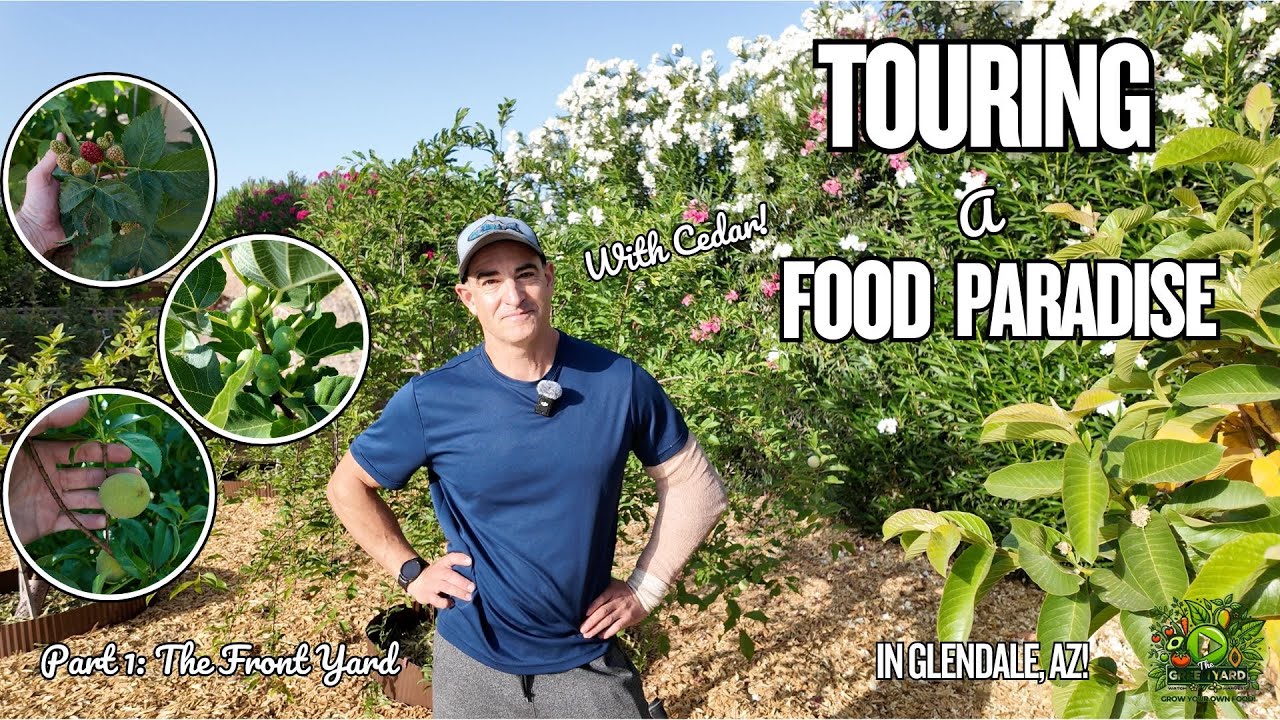
Glendale Front Yard Food Forest
Explore Cedar’s front yard edible landscape and hear directly from the grower about the fruit trees, experiments, and ideas shaping the space.
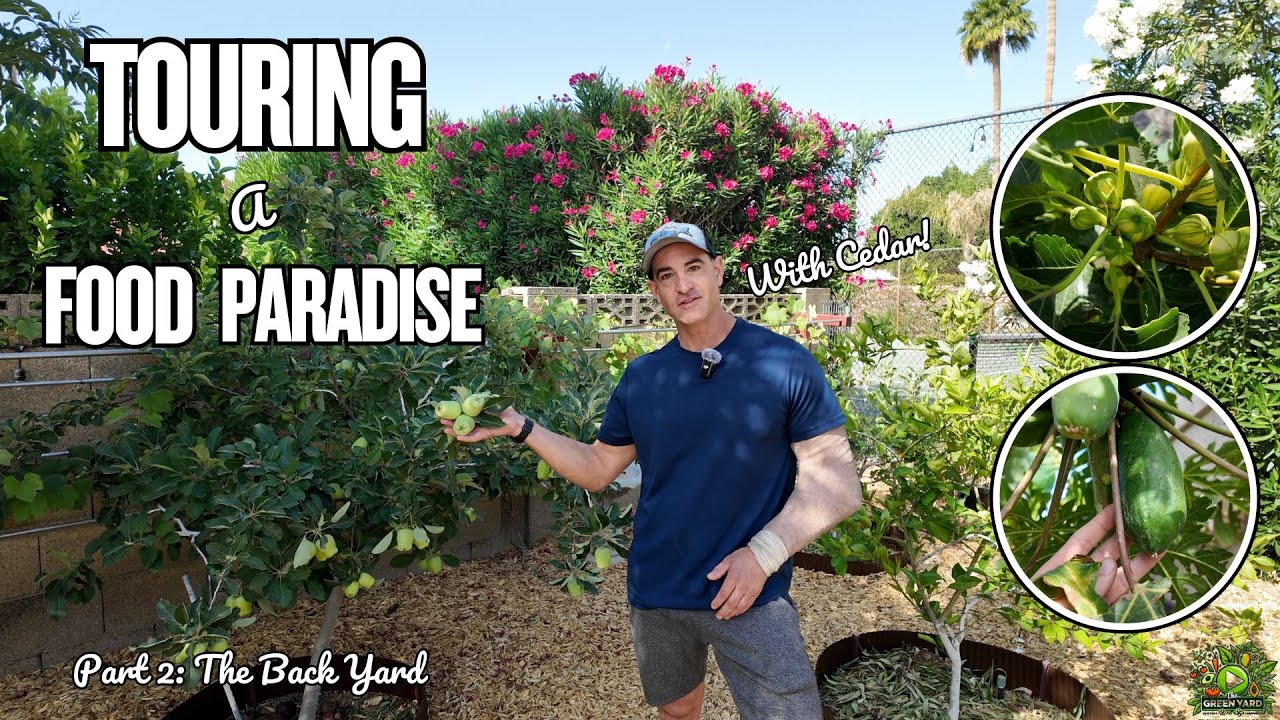
Glendale Backyard Food Forest
Continue through Cedar’s property and see how the backyard has developed through dense planting, shade, microclimates, and experimentation.
Growing Food in the Low Desert
Arizona includes very different growing environments, from the hot low desert to much cooler high-elevation regions. The Green Yard’s current Arizona tours are concentrated in the Phoenix metropolitan area, where growers are working with intense summer heat, limited rainfall, mild winters, and occasional freezes.
The landscapes featured here show how individual growers respond to those conditions in different ways. Shade, irrigation, mulch, canopy, plant placement, and microclimates all appear throughout the tours, but each grower brings their own experience and approach to creating a productive landscape in the desert.
Rather than presenting one formula for growing in Arizona, these tours are an opportunity to learn directly from the people doing the work: what they grow, what has succeeded, what has struggled, and how their landscapes continue to change through experience.
Arizona Low-Desert Growing Context
These broad points provide context for the Phoenix-area low desert where The Green Yard’s current Arizona tours are located. The individual tours show how growers actually respond to these conditions on the ground.
Mediterranean, coastal, desert, mountain, and inland climates all occur within the state.
Different crops thrive at different times of year, allowing growers to keep something productive through much of the calendar.
Phoenix summers regularly bring extreme heat, creating one of the biggest challenges for young and heat-sensitive plants.
Most winter days are mild, but occasional cold nights and freezes can challenge tropical and subtropical plants.
Growers depend heavily on irrigation while using mulch, soil-building, and other approaches to help conserve moisture.
The tours repeatedly show growers using shade, canopy, structures, and plant placement to create different conditions within one property.
What Arizona Growers Are Working With
Opportunities Growers Explore
- Abundant sunshine and a long overall growing season
- Established success with citrus, dates, figs, pomegranates, and many other fruits
- Mild winters allow growers to experiment with subtropical plants
- Dense planting and canopy can create increasingly protected spaces
- Local growers continue testing what can succeed in the desert
Growing Challenges
- Extreme summer heat and intense afternoon sun
- Very low natural rainfall and significant irrigation needs
- Alkaline soils and water can create additional growing challenges
- Occasional winter freezes can damage sensitive plants
- Young trees may need extra protection while becoming established
Plants Featured in Arizona Landscapes
Arizona growers featured by The Green Yard are experimenting with a wide range of edible plants. These are examples seen in low-desert landscapes; the individual tours provide the real-world context for how each grower is working with them.