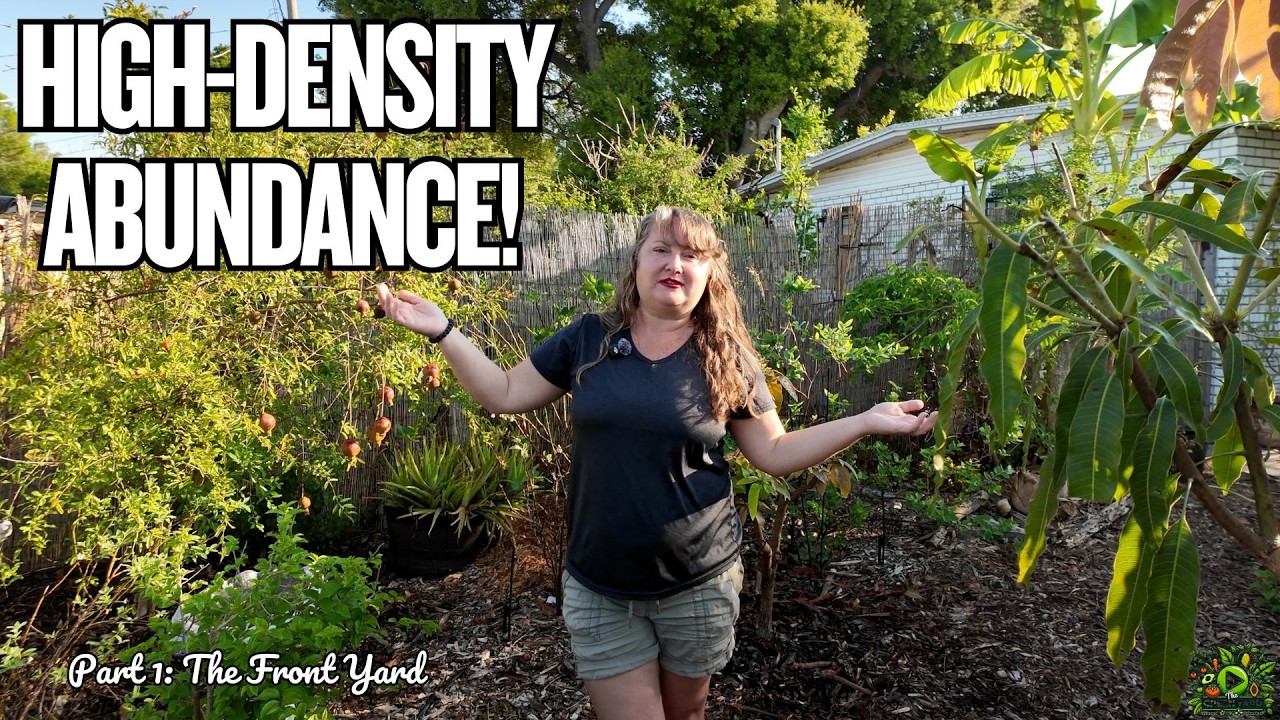
This Tropical Fruit Replaces Apples in Tampa
KC explains why jujube can be a productive alternative to apples in a climate with very few winter chill hours.
Tampa food forest, Gonza Gardens, Florida food forest, Tampa tropical fruit garden, tropical fruit trees, backyard food forest, edible landscaping, tropical gardening, USDA Zone 10A, Florida tropical fruit
Tour Gonza Gardens, a high-density Tampa food forest where KC grows tropical fruit trees, perennial vegetables, pollinator plants, and rare ornamentals in USDA Zone 10A.
In Part 2 of our visit to Gonza Gardens, KC takes us through the backyard, side yard, raised beds, nursery propagation area, and an astonishing collection of tropical and subtropical plants growing in Tampa, Florida. This densely planted residential food forest combines fruit production, perennial vegetables, rare ornamentals, wildlife habitat, and plant propagation within the same landscape.
KC and her family originally began developing the backyard as a garden filled with rare ornamentals collected from around Florida. As their interest in food forestry grew, edible plants were layered into the existing landscape, creating a garden where beauty, food production, and wildlife habitat all overlap.
The result is not a conventional orchard with widely spaced trees. Mangoes, sapodillas, mulberries, avocados, white sapotes, jackfruit relatives, perennial vegetables, flowering plants, vines, ponds, and nursery stock are fitted into nearly every available part of the property.
Many trees are pruned to remain reachable, while grafting allows several proven varieties to grow on a single tree. Upper-canopy plants also provide shade and protection for sensitive tropical species, helping KC grow plants that might otherwise struggle during Tampa’s occasional cold weather.
KC explains why jujube can be a productive alternative to apples in a climate with very few winter chill hours.
White sapote is cold tolerant, productive outside the main summer fruit season, and still unfamiliar to many growers.
Dutchman’s pipe produces unusual flowers and serves as a host plant for the Polydamas swallowtail butterfly.
Store-bought pineapple tops can be rooted and replanted, eventually becoming an expanding patch of homegrown pineapples.
KC shows how Shangri-La, Chiang Mai 60, and Skinner mulberries can grow together on a single grafted tree.
One of the strongest lessons from Gonza Gardens is the importance of choosing plants that want to grow in the local climate. KC explains that many of the apples, peaches, plums, pears, lettuces, peppers, and large tomatoes they initially tried were poorly suited to Tampa’s heat and limited winter chill.
Instead of repeatedly struggling with those crops, the garden now relies more heavily on subtropical and tropical alternatives. Jujube fills a role similar to a small apple, while moringa, katuk, longevity spinach, Okinawa spinach, and edible hibiscus provide perennial leafy greens better adapted to Florida’s heat.
White sapote is especially useful because it tolerates cooler weather and may provide fruit outside the main mango-heavy summer season. This helps spread harvests across more of the year rather than having every major fruit crop ripen during the same few months.
KC keeps several trees intentionally small. Mulberries are repeatedly pruned because fruit growing beyond reach often becomes bird food, while everbearing varieties such as Chiang Mai 60 can flower and produce again following pruning.
Grafting allows the garden to hold more varieties without requiring a separate mature tree for every cultivar. One mulberry carries three varieties, while sugar apple, white sapote, and other trees are being top-worked or grafted to improve fruit quality, pollination, and overall reliability.
Because the property is densely planted, KC considers the future growth habit and vigor of each tree. Slow-growing star apples can be planted relatively close and trained in opposite directions, while faster canopy trees such as ice cream bean and Cecropia occupy the upper layer.
The garden is designed to feed more than people. Firebush, porterweed, firespike, powderpuff, cassia, Dutchman’s pipe, dill, citrus, and other plants attract or support hummingbirds, butterflies, caterpillars, and pollinating insects.
KC also intentionally provides water through ponds and fountains. She has observed that birds may damage less fruit when clean drinking water is readily available. The same water features support frogs, lizards, neighborhood cats, and the larger backyard ecosystem.
Rather than treating insects and wildlife as separate from the garden, Gonza Gardens includes their interactions as part of a functioning food forest.
The Gonza Gardens backyard and side-yard tour includes dozens of tropical fruits, named cultivars, perennial vegetables, herbs, support plants, pollinator plants, and rare ornamentals growing in Tampa’s USDA Zone 10A climate.
Gonza Gardens demonstrates that abundance is not simply a matter of owning more land. KC creates abundance through variety, intelligent pruning, grafting, climate-appropriate plants, multiple canopy layers, and a willingness to experiment.
The property produces food while supporting hummingbirds, butterflies, frogs, lizards, and other wildlife. Even cold damage becomes part of the learning process, helping the garden evolve toward plants and protection strategies better suited to Tampa’s climate.
KC and her family also operate Food Forest Finds, an edible plant nursery specializing in plants that have performed well in their own Tampa food forest. Many plants are propagated directly from material growing on the property.