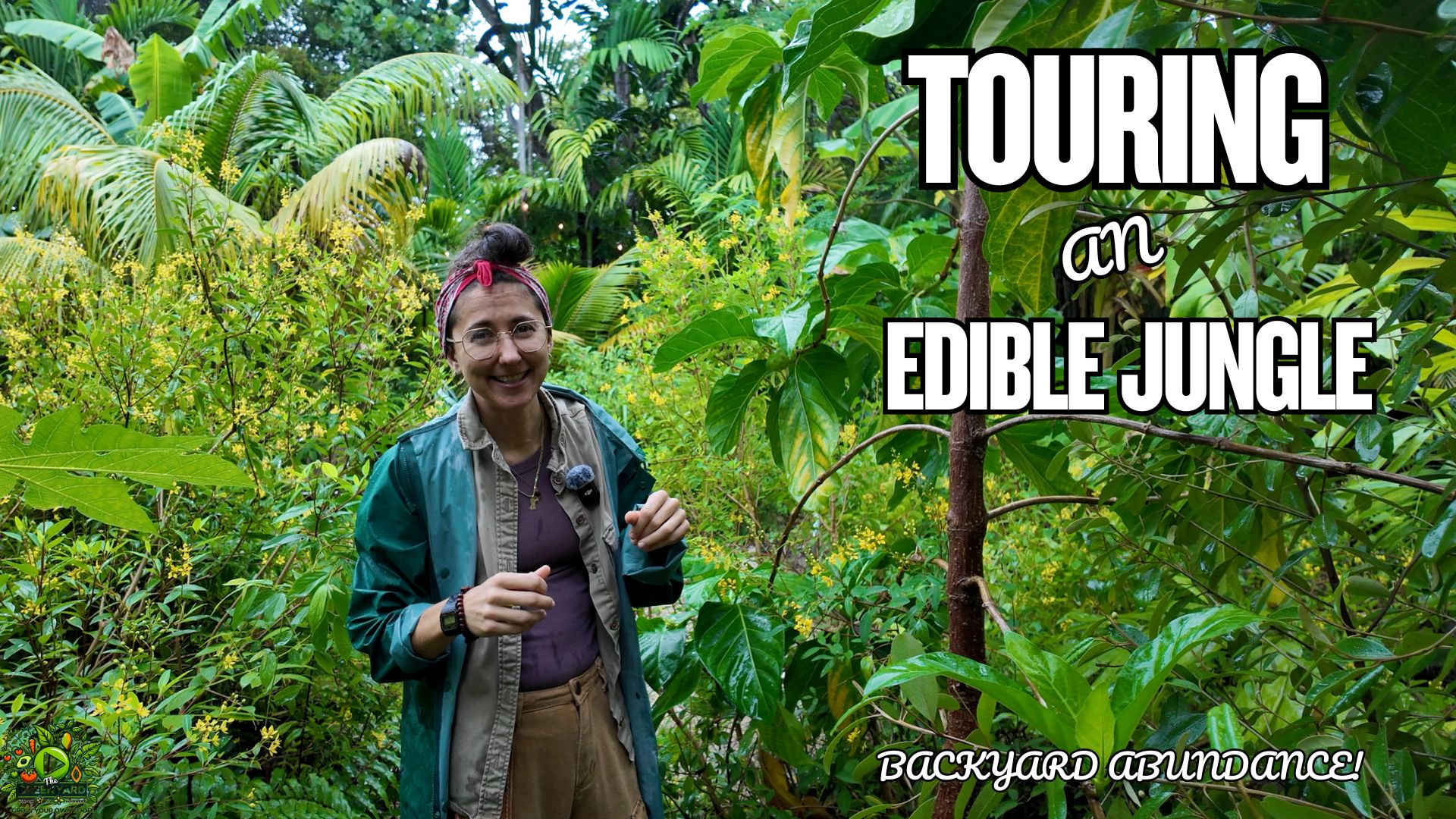
Miami Front Yard Food Forest Tour: Finca Morada’s Native and Edible Landscape
Miami food forest, North Miami food forest, Finca Morada, Florida front yard food forest, native plants South Florida, edible landscaping Miami, tropical medicinal plants, regional native plants, living fence, wildlife garden Florida, rainwater harvesting, Florida permaculture, shade tolerant food forest plants, community food forest, urban agroecology
Finca Morada’s Native and Edible Front Yard Food Forest
Explore Finca Morada’s wild North Miami front yard, where a living fence of regional native plants grows beside tropical fruit, medicinal species, edible groundcovers, pollinator habitat, and a community-built rainwater harvesting system.
Finca Morada’s front yard offers an alternative to the conventional South Florida lawn. Cris has transformed the entrance to this half-acre North Miami property into a diverse living landscape where regional native plants, tropical fruit, medicinal herbs, edible groundcovers, birds, butterflies, and people all participate in the same system.
Inside Finca Morada's Front Yard Food Forest
Most front yards are designed around turf grass and ornamental shrubs. Finca Morada takes a very different approach. Instead of separating native landscaping from edible gardening, this North Miami property blends regional native plants, tropical fruit trees, medicinal species, pollinator habitat, and edible groundcovers into one interconnected ecosystem.
The front yard serves as an invitation to imagine what residential landscapes could become. Rather than hiding food production behind the house, the edible landscape becomes the first thing visitors and neighbors experience. Every season offers a different combination of flowers, fruit, wildlife, and changing plant communities that continue to mature together.
This approach also challenges the idea that gardeners must choose between growing native plants or edible plants. At Finca Morada, both can coexist. Native trees and shrubs create habitat for birds and pollinators while tropical fruit trees, medicinal herbs, and perennial vegetables provide food and medicine for people. The result is a front yard that functions as a productive ecosystem instead of a decorative lawn. :contentReference[oaicite:0]{index=0}
What You'll Learn From This Tour
The Story Behind Finca Morada
Every garden has a history, and Finca Morada begins with honoring the people and place that came before. Cris explains that the property was already known throughout the neighborhood as the "purple house" because the previous owner loved the color purple. Rather than erase that history, the name Finca Morada—Spanish for "Purple Farm"—preserves that connection while giving the property a new purpose rooted in food, ecology, and community.
The half-acre property has evolved since 2019 into an educational urban food forest containing more than 200 species of edible, medicinal, native, and support plants. Instead of viewing the garden simply as a collection of plants, the team describes it as a practice of reconnecting with the land and rediscovering land-based ways of living, even within a dense urban neighborhood. :contentReference[oaicite:1]{index=1}
A Living Fence Instead of a Conventional Hedge
One of the first things visitors notice is that the property doesn't hide behind a row of identical shrubs. Instead, the front boundary is a living fence composed of roughly thirty regional native species from South Florida and the wider Caribbean. These plants demonstrate that a privacy screen can also become wildlife habitat, educational space, and an expression of local ecology.
Regional native plants from areas such as the Bahamas, Cuba, and the Yucatán Peninsula are well adapted to South Florida's climate and help support birds, butterflies, and pollinating insects. By combining multiple native species rather than planting a single hedge, the garden creates year-round diversity in structure, flowers, fruit, and habitat.
For neighbors walking past the property, the living fence quietly demonstrates another possibility for urban landscapes—one that values ecological diversity instead of uniformity.
Native Plants and Edible Plants Can Grow Together
One of the most valuable lessons from Finca Morada is that gardeners don't have to choose between supporting wildlife and producing food. Throughout the front yard, regional native plants grow alongside bananas, papayas, edible groundcovers, medicinal herbs, and tropical fruit trees. Rather than separating ornamental landscaping from food production, every layer contributes to the health of the ecosystem.
Native plants attract birds, butterflies, and beneficial insects while also providing shelter and nesting habitat. Many edible species benefit from the increased biodiversity, and the wildlife in turn helps with seed dispersal, pollination, and natural pest management. Instead of competing with one another, native and edible plants become partners in creating a healthier landscape.
This layered approach also creates a more resilient garden. Different species occupy different ecological niches, reducing the dependence on any single plant while increasing overall diversity and seasonal interest.
Designing Every Layer of the Food Forest
As food forests mature, sunlight becomes increasingly limited beneath the canopy. Finca Morada demonstrates why selecting plants for every layer of the landscape is so important. Tall trees eventually provide shade, but productive gardens continue beneath them through carefully chosen understory shrubs, herbs, perennial vegetables, and native groundcovers.
Many regional native shrubs naturally evolved beneath larger forest trees, making them well suited for these shaded conditions. Species such as beautyberry and wild coffee continue providing habitat and seasonal interest while occupying spaces that many fruit trees cannot. At the same time, edible plants like longevity spinach and Cuban oregano make productive use of the lower layers of the garden.
Thinking vertically rather than horizontally allows the property to produce more food, support more wildlife, and create a richer ecological community without requiring additional space.
Plants Featured During the Tour
The front yard introduces visitors to an impressive diversity of native, edible, and medicinal plants that work together throughout the landscape. Some primarily provide food, while others attract wildlife, improve soil, support pollinators, or offer traditional medicinal uses. Together they illustrate how diverse planting creates healthier and more resilient urban ecosystems.
- Longevity Spinach — An edible perennial groundcover growing beneath larger plants.
- Dwarf Namwa Banana — A compact banana variety producing full-sized fruit in a smaller space.
- Papaya — Fast-growing tropical fruit tree integrated among native species.
- Cuban Oregano — Aromatic medicinal herb commonly grown throughout tropical gardens.
- Beautyberry — Native understory shrub known for vibrant purple berries and mosquito-repelling foliage.
- Wild Coffee — Shade-tolerant native shrub that produces berries enjoyed by birds.
- Cocoplum — Native fruiting shrub that functions as both edible landscape and living hedge.
- Surinam Cherry — Productive edible hedge producing small tropical fruit.
- Gumbo Limbo — Iconic South Florida native tree supporting tropical hardwood ecosystems.
- Dade County Pine — Historic native pine once common throughout Miami-Dade County.
- Sensitive Mimosa — Native groundcover recognized for leaves that fold when touched.
- Porterweed — Pollinator favorite attracting butterflies throughout the growing season.
- Bananas — Including larger Burro bananas connected to the rainwater harvesting overflow.
Community Education Through Gardening
Finca Morada is more than a productive garden. Nearly every major project on the property becomes an opportunity to teach others. When the team installed their 500-gallon rainwater harvesting system, they invited community members to participate in a free workshop so everyone could learn the process together.
That philosophy extends throughout the property. The goal is not simply to create one successful homestead, but to help more people reconnect with the land, increase neighborhood resilience, and develop practical skills that can be replicated elsewhere. By openly sharing knowledge, Finca Morada turns gardening into community education rather than a private hobby.
This emphasis on education reflects one of the defining characteristics of the property: every plant, every project, and every tour becomes an opportunity to inspire others to imagine new possibilities for their own yards.
Plant Collection Overview
Although this tour focuses primarily on the front yard, it introduces a remarkable diversity of regional native plants, edible crops, medicinal species, and support plants. Many of these species perform multiple functions—feeding people, supporting wildlife, improving biodiversity, or occupying different layers within the food forest.
View Complete Plant List Hide Plant List
Fruit & Edible Plants
- Banana (Dwarf Namwa)
- Banana (Burro)
- Papaya
- Surinam Cherry
- Cocoplum
- Longevity Spinach
Native Plants
- Beautyberry
- Wild Coffee
- Gumbo Limbo
- Dade County Pine
- Sensitive Mimosa
- Porterweed
- Rough Velvetseed (Rauvolfia)
Medicinal & Support Plants
- Cuban Oregano
- Thoralis (Arnica Brava)
This list represents the plants specifically highlighted during the front-yard tour. Finca Morada contains well over 200 edible, medicinal, native, and support species across the entire property, making it one of the most botanically diverse urban food forests featured on The Green Yard.
Key Takeaways
Finca Morada demonstrates that productive landscapes don't have to choose between beauty, ecology, and food production. By combining regional native plants with tropical fruit trees, medicinal herbs, edible groundcovers, and wildlife habitat, the garden creates a landscape that benefits both people and nature.
Equally important is the philosophy behind the garden. Community education, honoring the history of the land, sharing knowledge through workshops, and designing for long-term resilience are woven into every part of the property. The result is more than a food forest—it is a living example of how urban neighborhoods can reconnect with the land.
Additional Resources
Continue Exploring Finca Morada